
Made in the USA
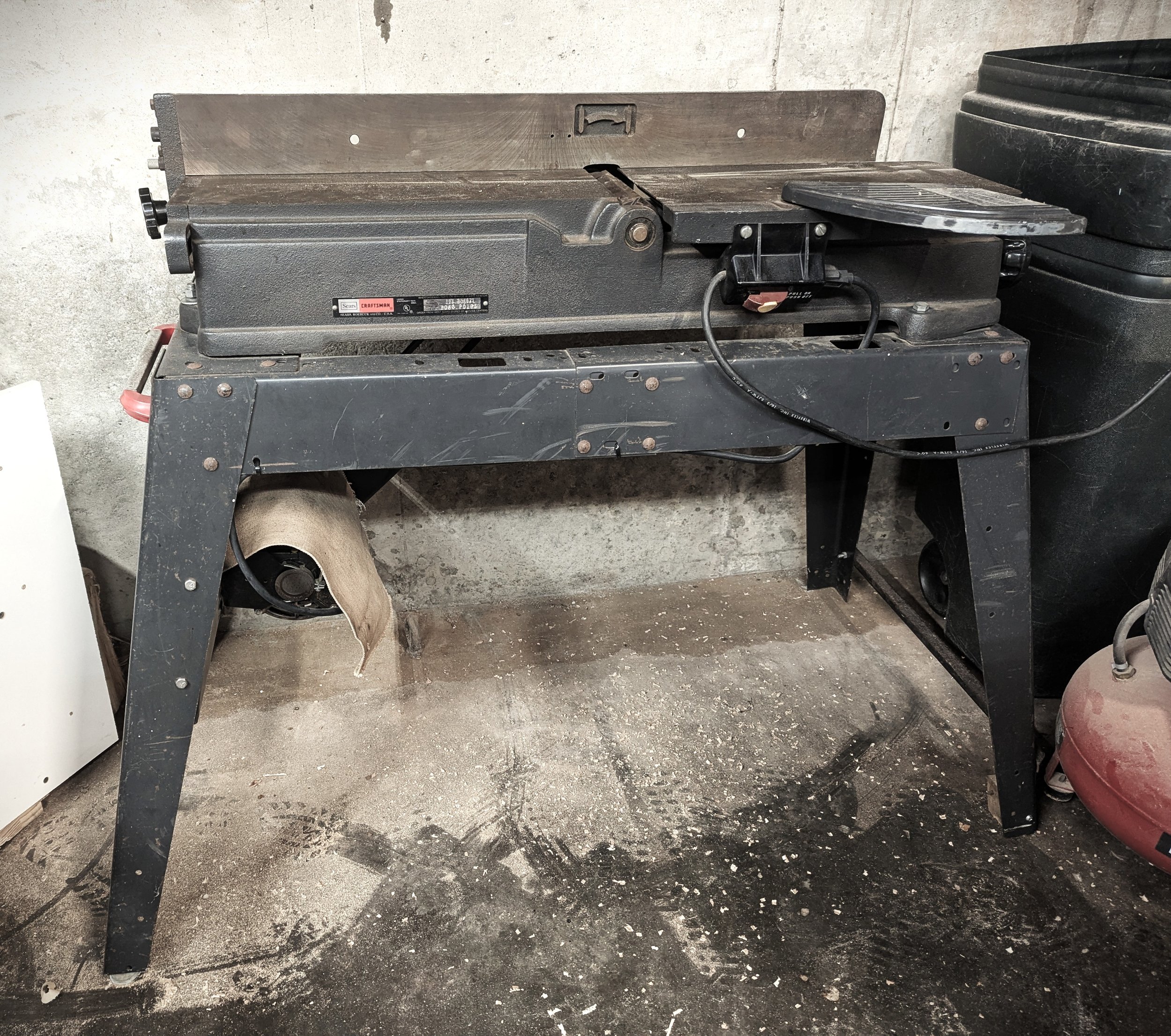
We picked up this gem of a jointer for free the other day. One of the many perks of Faith’s MakeHaven membership is that people often post stuff like this for free or stupidly cheap. A kid named Alex from North Haven was clearing out his family’s suburban garage and saw no reason to keep it. He was at the golf course when we arrived. We left him an assortment of beers left over from our summer party, loaded the jointer onto the truck we borrowed from a friend, and brought it home. Later, he sent a selfie of himself drinking one of the beers. Sorry to have missed you, he said. Send a pic of something you make with it. Cheers. Will do.
I’ve written here about jointers and makerspaces before. Ours is a DIY 6-inch jointer; MakeHaven’s is an industrial 16-incher. Whatever.
I won’t bore you too much with this Craftsman jointer, other than to say it has a solid cast-iron table and fence and a steel base. We can testify to its sturdiness, having just moved it from one place to another. Right now, I’m more interested in the geopolitics and corporate drama of power tools like this one.
Craftsman started as a Sears line in 1927 with an admirable selling point: an unlimited lifetime warranty. Sears never actually made Craftsman products. They contracted the work to other US manufacturers. And their stuff was good, but they were smart, marketing-wise, about what “good” meant. From the beginning, the Craftsman line introduced a three-tiered product line: good, better, and best. Harbor Freight later adopted the same strategy and expanded it with a color-coding system. Craftsman’s “better” or middle-tier line was manufactured by companies like DeWalt, which is the top-tier stuff you’ll find at big-box home stores today. Craftsman’s truly top-tier line was produced by professional toolmakers like Jet and Laguna, which cost thousands of dollars.
In 2010, Sears sold Craftsman to Stanley Black and Decker, which meant SB&D now also owned DeWalt, because B&D bought DeWalt in 1960. Stanley is known in woodworking circles for its bomb-proof professional hand-planers. B&D used to be a serious brand that built tools used in World War II and later introduced the first cordless power tools. Now, though, it’s an inexpensive, subpar brand mainly sold at Kmart, focusing more on kitchen appliances than woodworking. Even so, SB&D agreed to uphold the original 1927 unlimited lifetime warranty Sears and Craftsman had promised. That holds true to this day.
ECW’s new vintage Craftsman jointer is circa 1980s. It’s not nearly as big as its industrial counterparts, but it’s solid and will do the job, especially with the new blades that arrived today. As Craftsman tools go, it falls under the label of Best.
And it was made in the USA. This is what I really want to talk about.
Craftsman tools occupy this weird in-between space. They’re American-made in some cases, or were, with those amazing unlimited lifetime warranties, but from the start, they trailblazed an era in which a company like Sears contracted manufacturing out to other companies and simply slapped the Craftsman label onto products made by a variety of toolmakers. By the 1980s, when companies like DeWalt were brought into the loop, it meant that some Craftsman tools, like all DeWalt tools, were manufactured in China. Not the “Best” ones, like our jointer, but the ones that ended up in Home Depot and Lowe’s. DeWalt isn’t the only US company that does it. Jet, Grizzly, Laguna, Powertec, SawStop, and a host of other American companies now have their tools manufactured in China and throughout Southeast Asia. They might have been engineered and designed here, but they’re built elsewhere.
They all cost more than their Chinese-owned counterparts with names like Banggood (one that I was a little worried about Googling), ENJOYWOOD (also potentially sketchy), Hongdui, Wnew, and Ganwei. But confusingly, here are the names of some other Chinese tool companies: Harvey Industries, Bridge City Tool Works, and Maxpower Tools.
If the question is about quality alone, there’s no reason to dismiss all Chinese-made tools. Couple that with the price difference and the fact that most American-owned tool companies produce their stuff in China anyway, and it becomes hard to think of a good reason for scrupulously avoiding Chinese counterparts. Unless, of course, you either disdain China and/or feel a moral compulsion to support the very small handful of remaining U.S. tool manufacturers by spending a whole lot more money on the things you buy. I know this is controversial, but I’ve often pondered another way of looking at it: Why shouldn’t I want to support workers everywhere and hold corporations and politicians responsible for the decline in U.S. manufacturing instead of consumer choices and China?
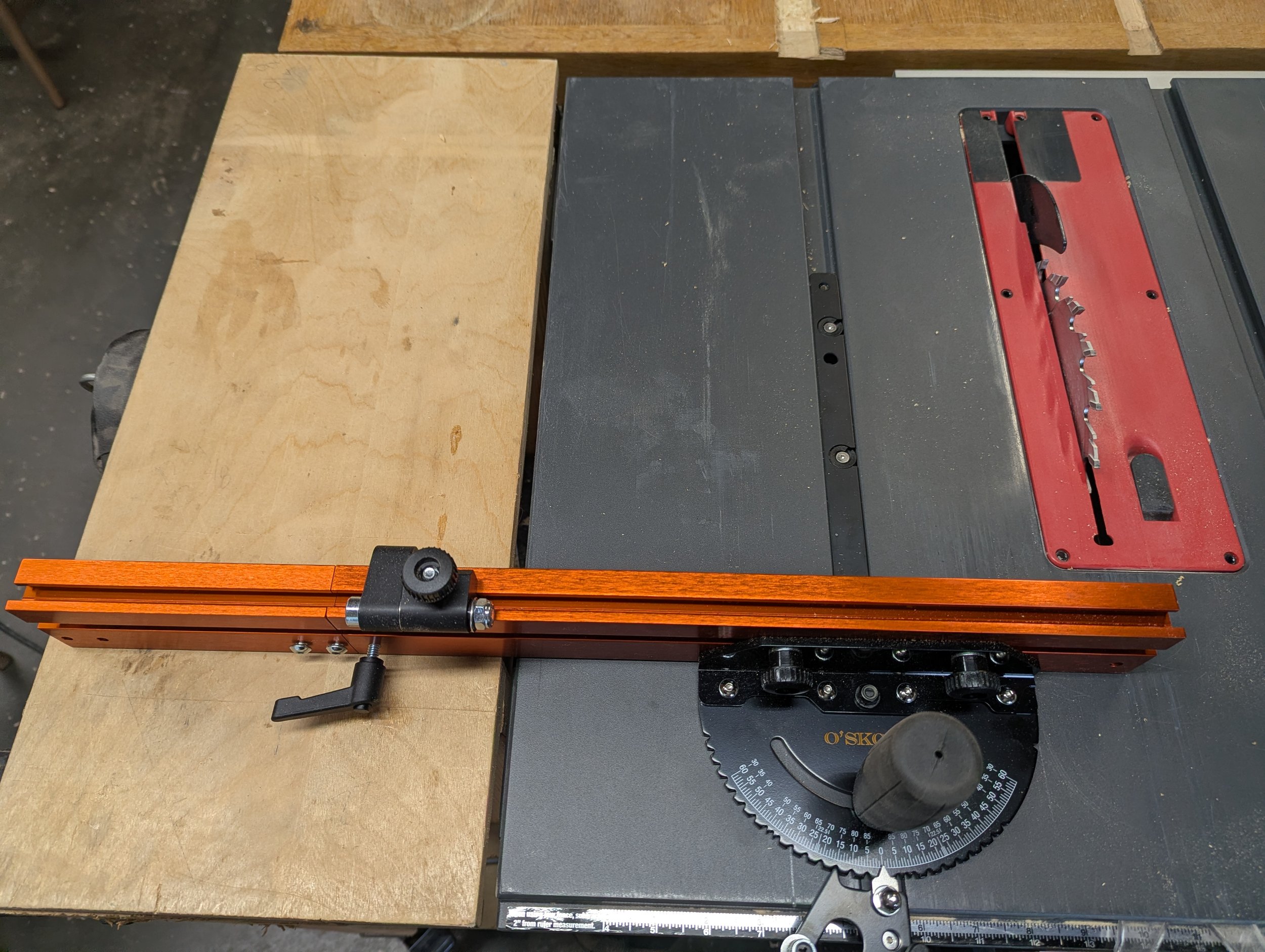
I wanted a new miter gauge for the table saw. A miter gauge is a T-shaped thing that slides back and forth in a slot on the surface of the table saw, allowing you to move material through the blade comfortably, steadily, and at various angles. Saws come with them, and they’re always garbage, even if it’s a good saw. A USA-made brand called Incra sells fancy miter gauges for $350 dollars. I eyed the salacious-sounding, less expensive options from Banggood and ENJOYWOOD, but the one that captured my attention was from a Taiwanese company called O’Skool. I bought it. It’s fantastic.
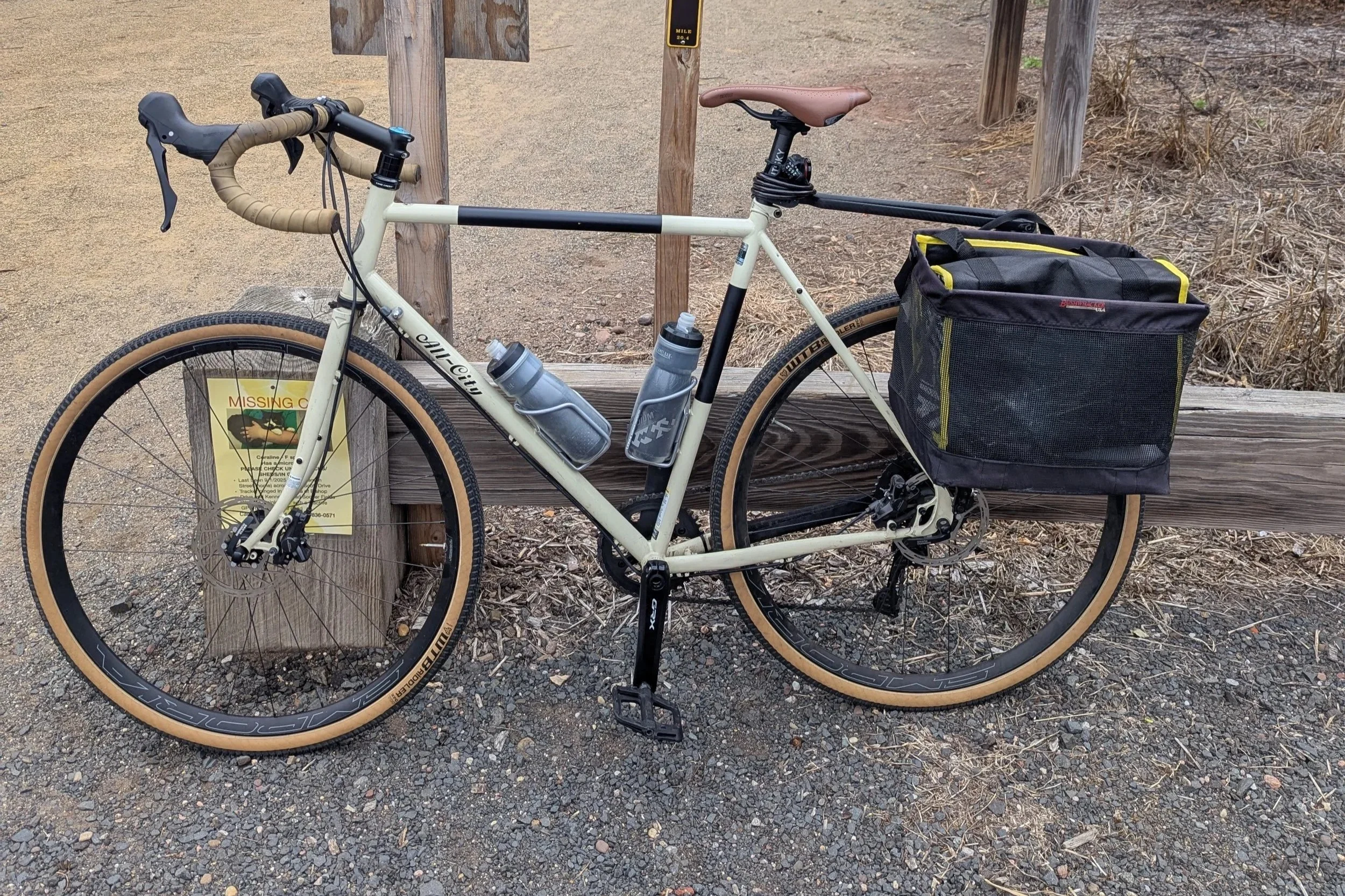
There’s a manufacturing district in Taiwan, in Taichung City, that really took off in the 1980s as a higher-end ecosystem of precision manufacturing. It so happens that two of their specialties (i.e., they make some of the best stuff in the world with extraordinary efficiency and skill) are woodworking tools and bicycles. It’s a cluster of family-owned businesses where people build things by hand, no robots, and knowledge and know-how are passed down from generation to generation. My go-to bike is a steel-frame All-City gravel/commuter bike. I use it for everything from riding to work, the pier, brunch, or longer bike camping trips. Compared to my other bike, a much racier, lightweight, fully carbon fiber, pimped-out beast of a machine (it’s up for sale if you’re interested), the All-City is less Mustang and more Honda. It’s comfortable, reliable, and gets the job done. And it’s quite pretty. I’m in love with this bike.
In the early 1970s, the US had a bike boom. Reporting is mixed about the cause. Some say it was the confluence of the counterculture and environmentalism. Others say it was the oil crisis. But in the year I was born, 1973, more bikes than cars were sold in the US. Then it briefly died off until the 1980s, when BMX culture became the rage for youngsters like me. I bought a super sweet Japanese Kuwahara BMX bike, tricked it out with colorful tires and handlebar grips, did wheelies, made plywood ramps, jumped it over small creeks, rode it to my friend Mikie’s house to play Nintendo, left it in the front yard, and someone stole it.
Taichung’s craftspeople got in on the BMX manufacturing craze in the 1980s, and then the mountain bike craze in the 1990s, and then the gravel bike craze in the 2010s, when I bought the All-City. It’s all done by hand, using bespoke welding machines for increased efficiency, and there’s a network of small shops that make it all work. One specializes in bottom brackets, one in tubing, one in handlebars, and so on. Shop owners speak English and come to the US for the major specialty bike conventions. US designers visit Taiwan to see how it happens and discuss refinements. Taichung’s craftspeople are respected as the best of the best in the bike world.
And so it goes with woodworking tools.
I don’t know much about manufacturing in China. I see videos of hyper-robiticized manufacturing plants making cars and whatnot with few people and a lot of AI. I suspect there’s also a lot of slave-like labor going on there still. The landscape is changing fast. But I know that in Taichung City in Taiwan, where my All-City and my new O’Skool table saw miter gauge were made, it’s a bunch of family businesses and seasoned crafters making stuff of no less quality, more efficiently, and, therefore, less expensively than Incra in Missouri.
I’m happy to know that my vintage Craftsman jointer was made in the USA. But I’m just as happy to know that my table saw miter gauge was handmade by legit craftspeople in Taiwan who probably grab a beer in the evening with someone who made my All-City bike.
