Turnpike Valentine
The throughline for what follows is either the saddest or most heart-warming journey we made today from New Haven to a town 30 minutes away, Berlin, CT. We weren’t sad about it in the least, but I can see how someone else might think so, not because Faith drove us to Berlin so I could stock up on supplies at Tandy Leather (Faith, btw, is the self-appointed driver in this family, and I’m not complaining one bit; I dislike driving), but because today is a) Valentine’s Day and b) Faith’s birthday. Let me be clear about the following:
Before Tandy, we had a lovely, not-cheap brunch at Shell & Bones, an upscale waterfront restaurant in New Haven’s City Point neighborhood on the New Haven Harbor. We arrived in time to beat the lovers’ day crowd and get prime seats at the bar (soon after, we were flanked by couples, one of which wore matching pink sweatshirts). We talked about riding our bikes back there once it warms up (and Faith’s hand heals), sitting on the outdoor dining deck, and using our monocular (intended for birding) to see if we can spot our house on the other side of the harbor. Don’t tell me that’s not romantic. Right? Totally is.
The actually intended and more plausibly romantic plans for this annual holiday/birthday mashup event are for next week, when we’ll drive to Brooklyn, grab a nice dinner, watch the Spurs play the Nets from like row five, clench our hearts hoping our favorite players are on the court and not ‘injured’ or otherwise being suspiciously ‘rested,’ purchase a Spurs jersey for Faith on the way IN, not out (mistakes were made at past NBA games), spend the night in an Airbnb that looks way more hip than us in the booking dot com photos, and who knows, maybe take in a museum or gallery the next day before coming back.
Plus, we had a ton of fun together today.
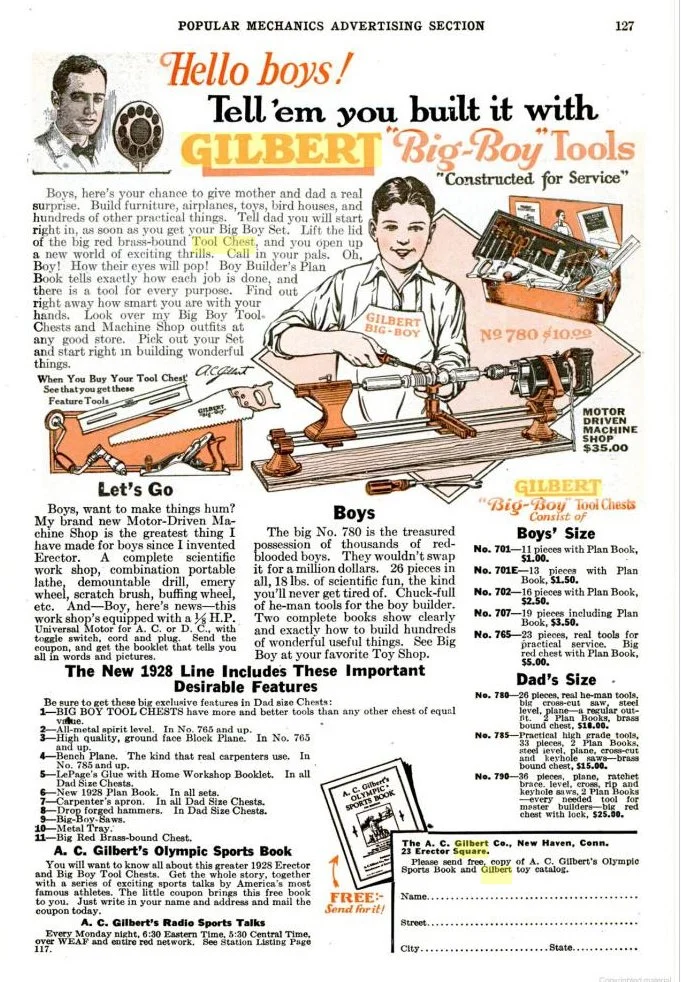
Tandy is the aforementioned throughline’s endpoint. I promise not to lose sight of that. But there’s that thing about the journey and the destination, which is also key here. In this case, my blog post idea surfaced on the trip there and back, including, eventually, the 11-mile stretch of Americana roadside curiosities known as the Berlin Turnpike. It’s So. Freaking. Fascinating to me. Even before taking the turnpike exit off Interstate 91 (I91 is the direct route from New Haven to Hartford), you can see (if you’re the passenger, like me) some noteworthy stuff, one of the more noteworthy of which, to me, is New Haven’s Erector Square. Allow me to digress for a moment.
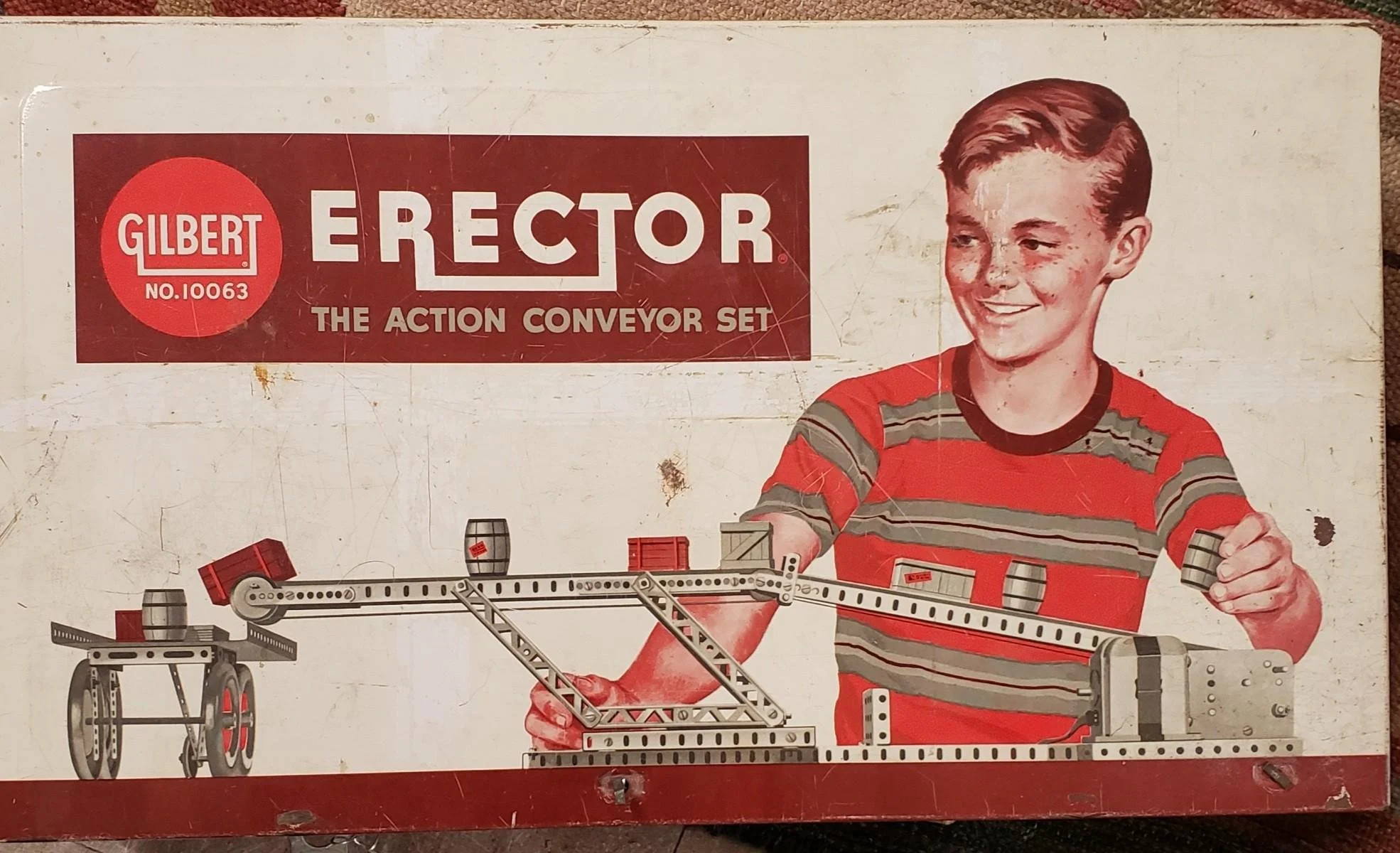
For those like me who experienced a 1970s and early 1980s boyhood, the Erector Set was standard indoctrination into c) the wondrousness of making stuff and d) the definitive toy-industry meaning of ‘boyhood.’ They were the invention of turn-of-the-century New Havener Alfred Carleton Gilbert in 1913, who unabashedly marketed them for the next half-century as quintessential boys-to-men toys. He successfully appealed a court order requiring him to stop manufacturing the sets during World War I (materials were scarce), arguing that boys who played with them would become competent soldiers and engineers. A judge bought it, and so did millions of Americans, especially after World War II, in the ensuing consumer age.
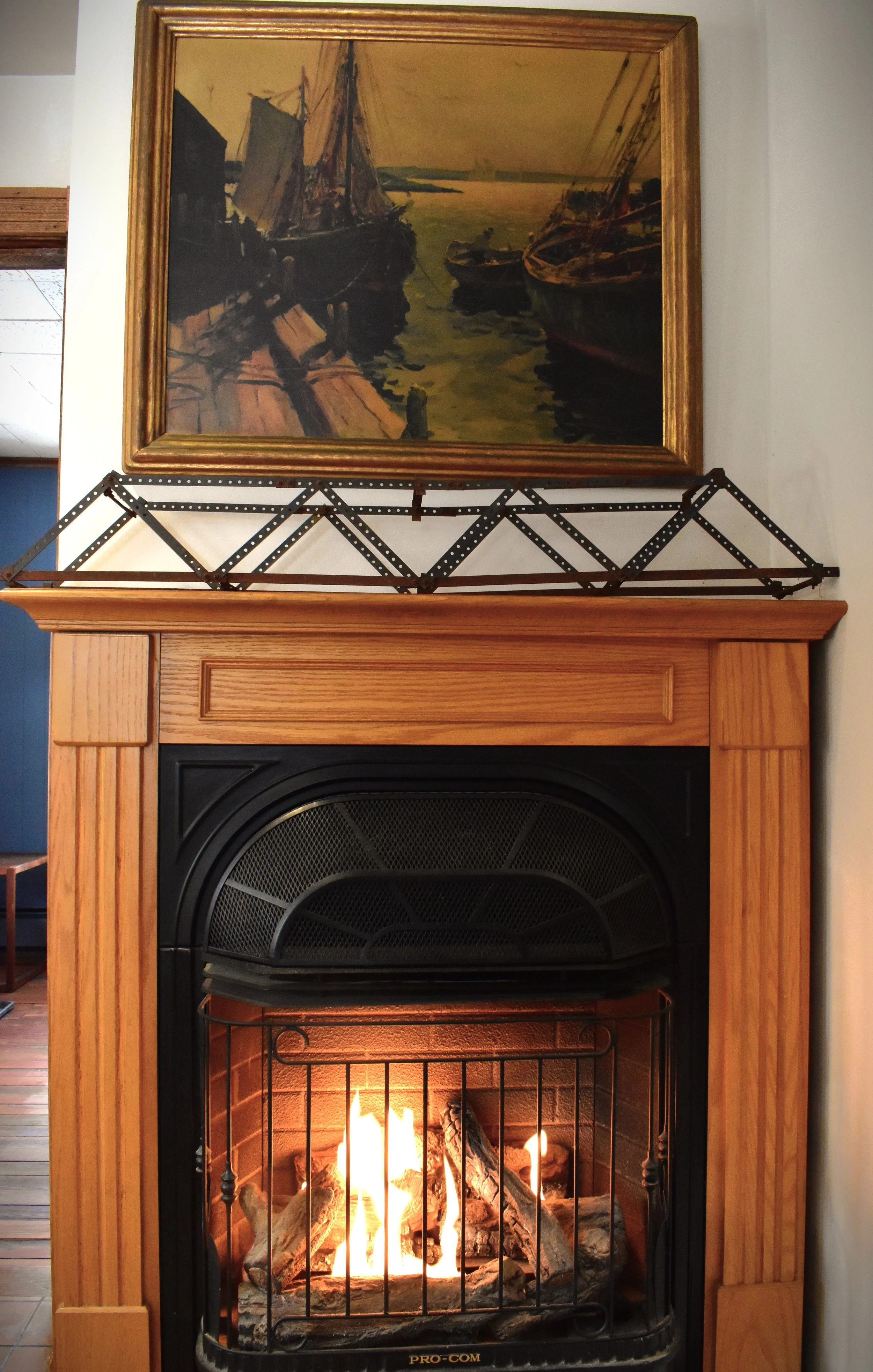
Upon moving into our new home a year ago, I found this Erector Set bridge, reason unknown, nestled atop a stone wall in the backyard. It now lives on the mantle of the foyer-entrance gas fireplace as a New Haven artifact dating back to who knows when. This is in keeping with the New Haven-to-Branford trolley track segments used as log grates in the wood-burning fireplace in the Sitting Room behind it. The previous owner of the house, a blacksmith, worked on the dismantling of the last remaining trolley track, down the street from us. If you’re interested, the painting above the Erector Set bridge, including the frame, is an authentic Goodwill acquisition. $10.
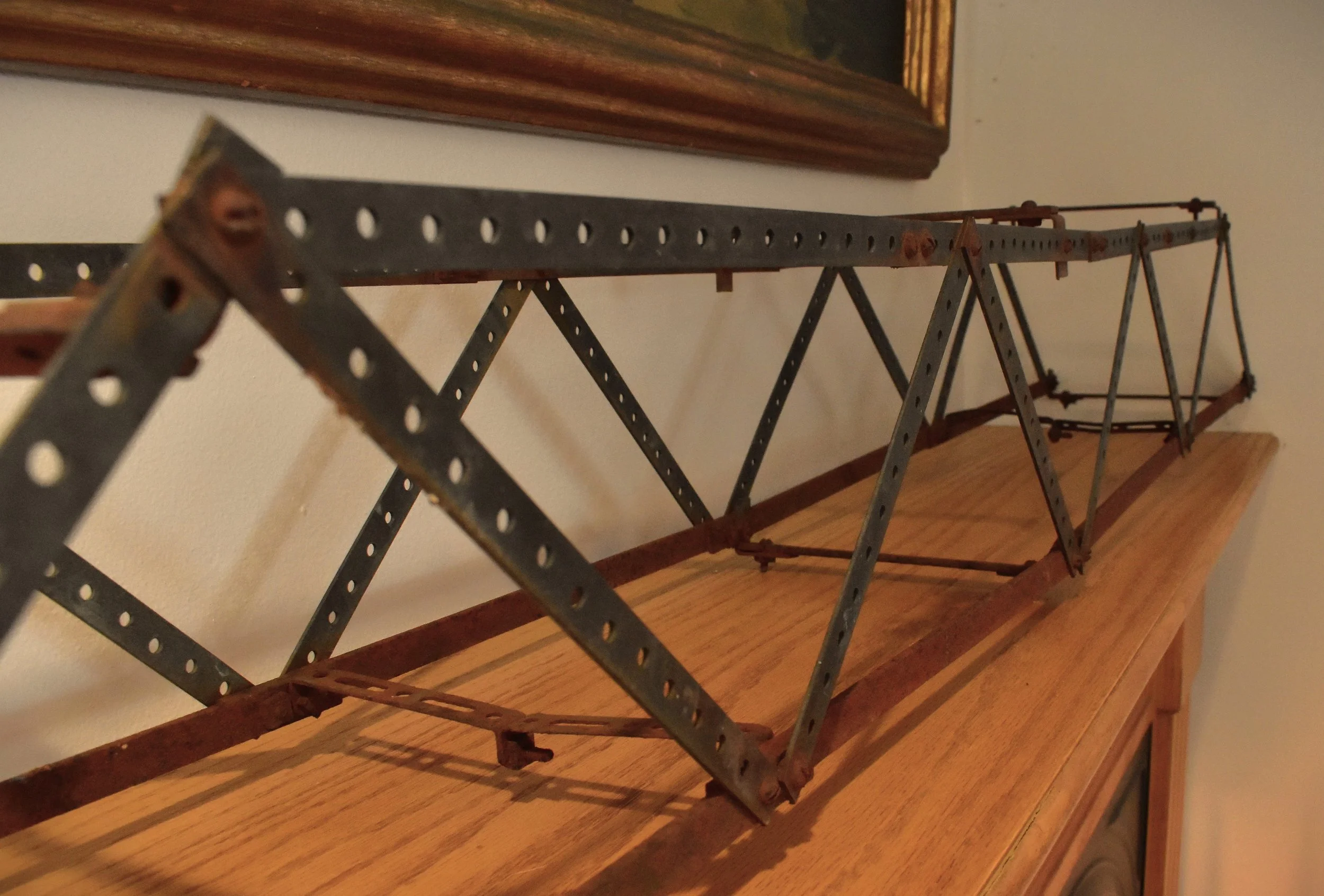
It looks like a bridge to me. But its likeness to the trussells above the Metro North train tracks, which hold the electrical wires, is uncanny.
Gilbert already had a lot going for him as a Princeton graduate with a Yale MD degree. But Gilbert, though always scientifically inclined (he also sold chemistry sets and the like), was somewhat of a Peter Pan, smitten with games, toys, boys, and magic throughout his life, taking a job for the Mysto magic company in New York. It was reportedly during a train ride from New Haven to New York that he saw the steel Erector Set-like structures being built across the newly electrified tracks that he thought, “Hmm, this would be an awesome boy toy.” The toy that involves a bunch of nuts, bolts, metal bits, and electric motors was born, and it made him rich.
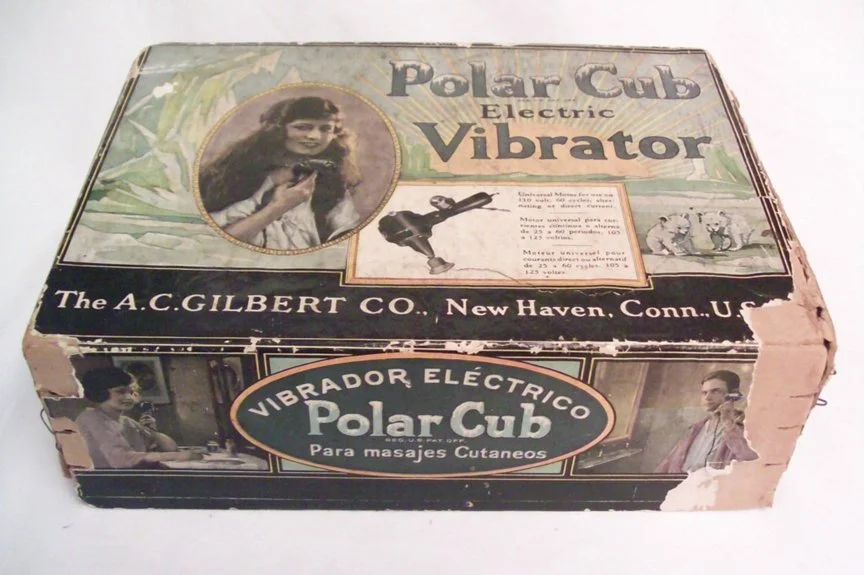
[Please note that I have some discomfort with Gilbert’s boy-centered marketing (Faith also built Erector Sets as a kid). The absolute centrality of his marketing toward boys is especially unsettling after reading a quote in which he said, paraphrasing only a little, that he had a fondness in his heart for boys aged six to sixteen. Also note, though, for what it’s worth, that Gilbert’s gendered understanding of who likes what was not exclusive to boys. In the 1920s, his company made vibrators for women. Online Gilbert aficionados claim he invented vibrators. Untrue, but his knack for using little electric motors in novel ways apparently made women’s sex toys an obvious market opportunity for him. Beginning in the late-19th century, early vibrator marketing was intentionally vague, allowing for possible use cases such as sore muscles and reducing facial wrinkles. But the aficionados also suggest that Gilbert’s success in this space was because he was less coy than his competitors about the vibrator’s intended use. Perhaps, but the packaging below seems sufficiently vague.]
Gilbert died in 1961, the company faltered, and there were buyouts. Technically, Erector Sets are still manufactured somewhere in the world under a different name. Not sure how much traction they still get. But the original factory complex in New Haven is now an artist colony. People rent spaces and make all kinds of stuff. Each year, it’s the primary venue for Citywide Open Studios, where New Haven’s artists and makers show and sell their stuff.
Fifteen or so minutes after passing Erector Square, Faith exits Interstate 91, and we’re on the Turnpike. If Erector Square is a post-industrial icon, then entering the Turnpike is like stepping into a wormhole to a different place and time. And if it’s not already obvious, the vibe I’m trying to send here is that this was, on paper, a weird Valentine’s date decision.
The Berlin Turnpike was an early version of the modern highway, CT’s Route 66. It was envisioned in the late 1800s as a four-lane road from New Haven to Hartford (all gravel until the 1940s). Little known is that, like much of the early road construction in the US, the clamor for the Berlin Turnpike came first from the cyclist community, and only later from the folks that the Hartford Courant called ‘automobilists.’ I learned this first from my friend and amateur cycling historian, Scott, a friend of the blog, and then again from Mary M. Donohue, an architectural historian and assistant editor of Connecticut Explored (formerly Hog River Journal, referencing a river that runs under Hartford, now called Park River, if you care to know), whose article on the turnpike, published on connecticuthistory dot org, is somewhat jarringly titled “A Hip Road Trip.”
That’s. I mean. Okayfine, let’s consider it.
If you wanted to get from New York City or New Haven to Boston back in the day, you’d have to go through a bunch of small towns and windy roads, and eventually through Hartford. Connecticut’s third highway commissioner, James MacDonald, commissioned a straight, wide road from New Haven County to Hartford. That became the Berlin Turnpike in 1909. Over the decades, improvements were made. The Eisenhower-introduced Interstate Highway System didn’t exist in CT until the 1960s, so before then, the Turnpike increasingly became a hopping place. In the 1930s and 1940s, ‘automobile parks’ were established for families and others who needed to spend the night cheaply by camping. Enter post-WWII prosperity, and you have the rise of hotelish spots with cabins, rooms, amenities, and whatnot, explicitly geared toward automobilists, i.e., motorists. What to call them? Motor hotels? M-otels? Motels! With bright, eye-catching roadside signs. ROADSIDE MOTELS.
By the 1950s, the Berlin Turnpike was such a popular stopping point for motorists that it was nicknamed “Gasoline Alley.” Roadside motels with Vegas-style neon signs abounded, along with gas stations, SO many gas stations, plus bowling alleys, diners, putt-putt golf, petting zoos, dance halls, ice cream shops, and hot dog stands before franchised fast food took over.
Those were the good times for the Turnpike. Then came Interstate 91, and things changed. No stoplights, six lanes, no more 22 mph speed limit. Great for the burgeoning freight container trucking industry, a massive bummer for roadside motel modernism, which, from Hitchcock’s Psycho to Schitt’s Creek, has had an illustrious place in the heart of both the heartland and American pop culture.
After the fallout, it didn’t take long for those motels to develop shady reputations as destinations for one-hour room rentals flanked by adult video stores and ‘movie arcades,’ extant venues for the private viewing of ‘smut films,’ one of whom’s sign still remains beside an abandoned structure, next to an abandoned car wash, next to the CT Department of Transportation offices, as if the location was still relevant there today, next to an empty yellow school bus in an empty field with a handmade sign that reads “Bus Drivers Wanted.” Happy Valentine’s Day.
Tandy is on the other side of the wormhole, next to Harbor Feight Tools, nail salons, suburban interpretations of trendy casual eating spots, and fitness gyms. I’m sheepish to show Steve - the manager, who, the first time we went, was wearing 1920s Irish garb, and who is now wearing flaming red-against-black Western cowboy garb - my first leathercrafting project, the Field Notes journal cover. He was enthusiastic, encouraging, full of praise, and talked about his own first project. Steve doesn’t try to sell you Tandy stuff. He wants you to enjoy leathercrafting and help however he can. He thinks it’s a journey, not a destination.
Here’s your much (or not)-anticipated storytelling analogy. The cliche is true. That’s how the cliche sausage is made. By being consistently true. With woodworking, leathercrafting, and my relationship with Faith, the journey matters most. It’s the fun part.
And here, to honor today’s journey, are some of the things I saw along the way and recorded in my Field Notes journal:
Rosebud Motel (with outdoor Dr. Pepper Machine)
Plaza Motel
Elwood Motel
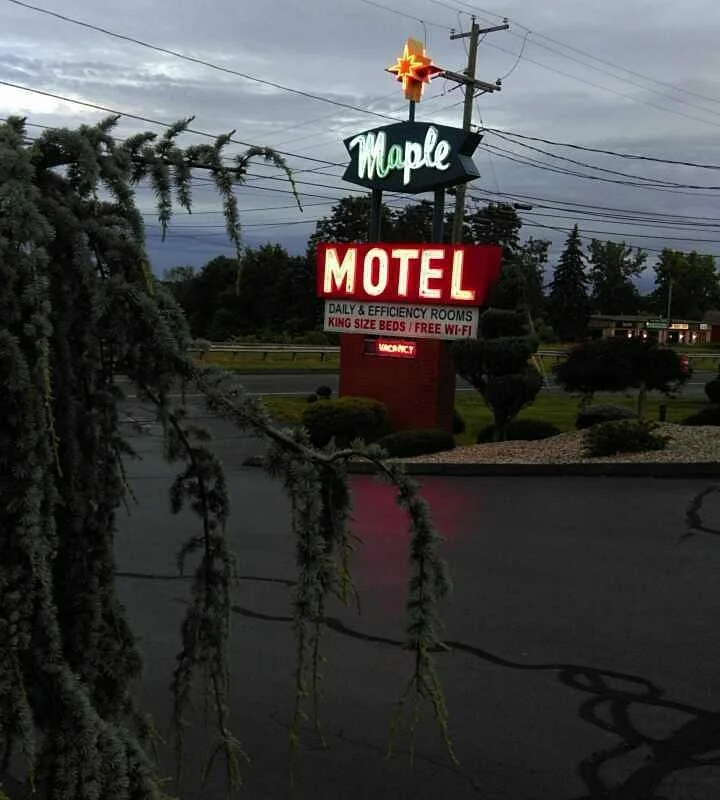
Maple Motel
Holiday Motel
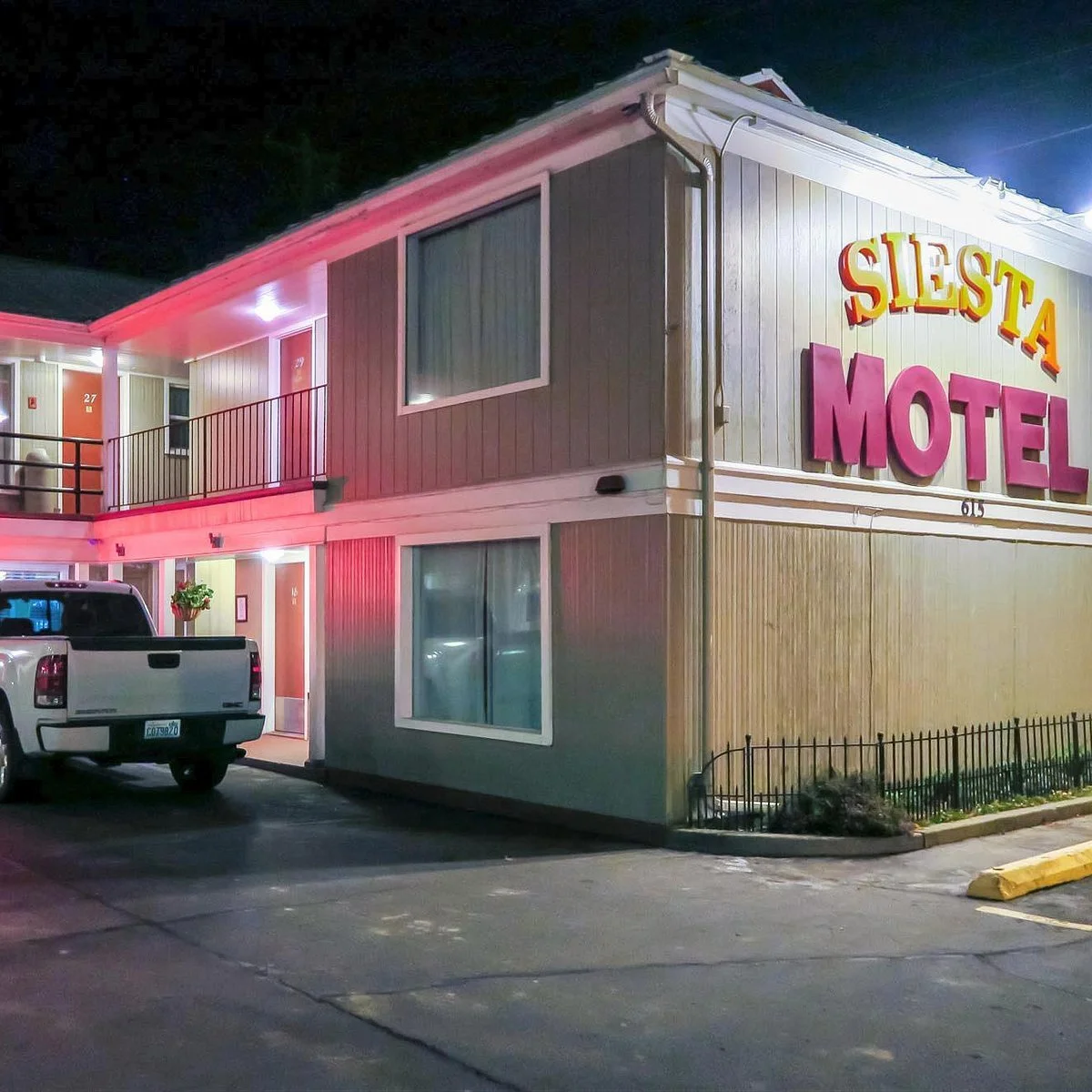
Siesta Motel
Fifth Ave Motel (unclear whether this one catered to Midtown Manhattan residents)
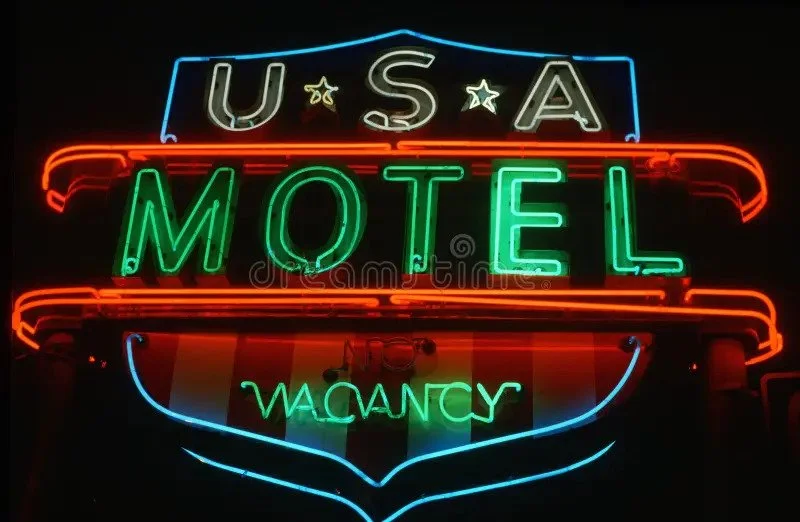
USA Motel
Flamingo Inn
Welcome Inn
Mount Royal Inn
Berlin Motor Inn
Deylin Motor Lodge
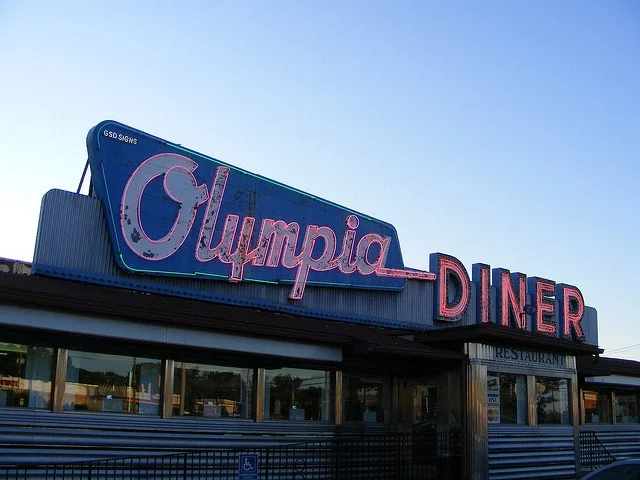
Olympia Diner (still a classic)
Safari Golf (with plywood giraffes)
Celebrity Home Care and Transportation, operated out of a mobile home trailer
McBarber, unclear whether referencing drive-through haircuts or James MacDonald, the Berlin Turnpike’s early Visionary
Support us by following and sharing the Elm City Wares Substack newsletter.