
Chairitable Enterprise
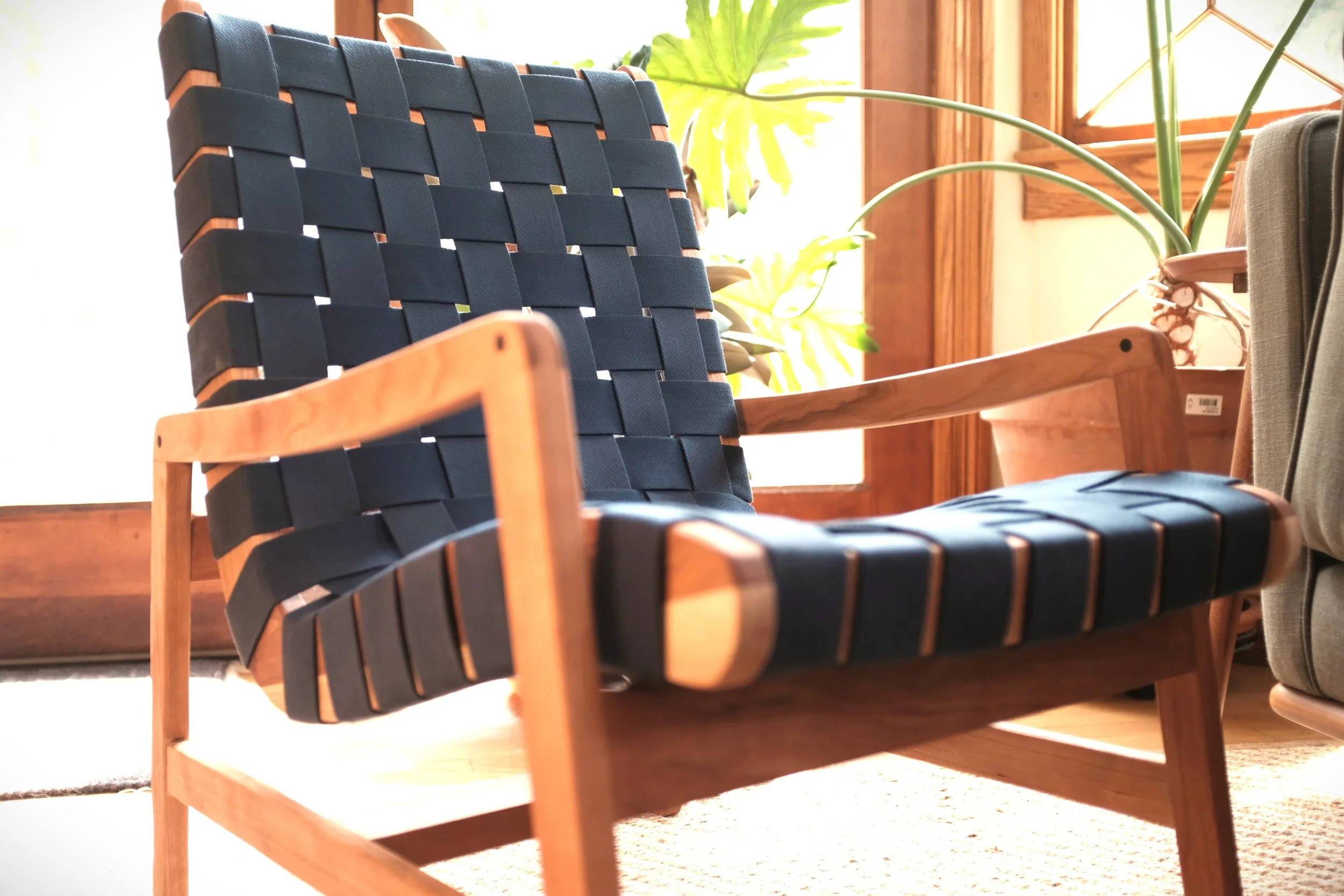
The Rhizome Chair (001)
I just wrapped up the Spring semester. If ever there were a good use for the “mixed bag” metaphor, it’s this one. On the one hand, I’m looking forward to long summer days, steady hours of woodworking with the barn doors wide open, watching vegetables and flowers grow in the garden that we started from seed in the house at the tail end of winter, eating outdoors, shooting hoops, playing tennis, camping, and scenic bike rides, all of which will be unencumbered by work for the next three months. The life of a college teacher has perks, and this is one of them.
On the other hand, the end of a semester is absolutely dreadful for college teachers. Students who ignored the late work/extension policy and submitted little to no assignments for weeks or months suddenly become aggressively intentional about their schooling and about emailing me to let me know. They also become brilliant at pressure campaigns. They’ll lose their scholarship if they don’t pass. They won’t be able to graduate next week, and their families are flying in from other places for it. Or, in a predictable handful of cases, they’re “not gonna lie,” they totally dropped the ball, it’s all on them, but they’d appreciate the opportunity.
The “opportunity” they’re asking for is to somehow complete six or eight or ten weeks of my course in two or three days, which is a non-blog-related source of confusion and irritation that I won’t go on about, but I nonetheless relate to these honest slackers more than the suddenly, miraculously arduous rest of the lot.
I, too, am an honest slacker. And I’m not gonna lie. The chair you see above is a mixed bag. It’s not perfect, it took way too long to build, but it’s a chair, my first, and I’m happy about it. Universally, woodworkers recognize chairmaking as among the greatest challenges they face. Many never try it. Lots of curves and angles that somehow need to come together in a way that does what almost every other woodworking project doesn’t: be comfortable for the human body.
Mine is based on the design of three chairs I own by Jens Risom, a mid-century furniture designer who started with Knoll and then opened his own design and manufacturing operation in Connecticut. A while back, Faith and I adopted a rescue dog, Beaumont (Bo), from Puerto Rico. Staying with the mixed bag theme, he’s an adorable asshole. He’s cuddly as all get-out, stupid cute, and mischievous. He likes to roll around in dirt, grass, puddles, ditches, and swamps. He was six months old when we got him, and he was in a teething phase. He chewed on fingers, house plants, and furniture, including one of my Jens Risom chairs.
I removed the webbing, deconstructed the chair, and started sanding it, but I never finished the restoration. Honestly, not gonna lie, my effort has stalled. That’s on me. I dropped the ball. However, I did use it to draw templates, which I used to cut out the parts to make my own version of it. Slowly and incrementally, with a few design tweaks along the way, my Risom-inspired chair came to life. There were problems and obstacles throughout the process, starting with my decision to use traditional mortise-and-tenon joinery. To do that, you need to (i.e., should) plan ahead when cutting the pieces, because the tenons, usually ½ inch, require an extra inch of length on the pieces. Never mind if that doesn’t make sense. The consequence is what matters. The chair is a bit small. Child-sized small. Like a few other pieces I’m working on right now, I’ll be donating this chair to our local immigrant and refugee resettlement non-profit organization. Hopefully, a small human will find comfort in it.
It’s beautiful and sturdy. Between the wood and the webbing, which isn’t cheap, the materials for the chair cost around $150, maybe $200. You can purchase Risom’s chair from Design Within Reach for a little north of $2,000. I’ll sell them for $500 (regular size) and $450 (small, like the first one I made).
So there it is. I made a chair. What did I learn from the process?
Mistakes can be corrected and prevented going forward. That’s the beauty of them. You deal with them and learn from them.
Planning matters. I’ve been accused of being an over-planner, which is true about some things. The accusation in question was regarding bike camping trips (and the twenty-page, extensively hyperlinked Google Docs I created for them), but I also have every kind of insurance imaginable. I update my living will and powers of attorney documents yearly. I plan for death, disaster, breakages, outages, and anything else that could go wrong. Faith claims to have a scarcity mindset. I suppose I have a catastrophe mindset. But in woodworking, I dive into deep waters cannonball-style, without a worry in the world, but then the worries set in after I realize my mistakes, which result in child-sized furniture. Maybe there’s a niche for that.
Originality is hard. Like many of my students, I cheated. I copied the Risom chair. But unlike them, relying on chatbots, copying Risom was still really difficult, and a helluva lot of work. Unlike their essays, I made this chair myself. But it’s Risom’s design. A gorgeous design. So, okay, allow me to conclude by resorting to what I know best. The ancient Greeks had words for art and craft: poiesis and techne. Poiesis was the bringing to life of something that did not previously exist. Poiesis is art, the making of something new. Techne was know-how, craft. What I learned from making this chair was how to better execute the joinery and measurements. Next time, the Rhizome Chair will be less imperfect and adult-sized. But the question that remains is about the artistic, design side of things. I’m not a huge believer in pure originality. I think everything we think, say, do, and make reiterates and refines what has been thought, said, done, and made before. Still, I want to challenge myself to put my own spin on this chair, version 002, 003, and so on. Yes, I want to correct the dimensions, but I also want to become more of a designer, not just a producer. But it’s hard.
Making the Rhizome Chair was a charitable experience. I got better at joinery and learned from dimensional mistakes. Someone will enjoy this chair through my charitable donation. It has helped me and will, hopefully, help others. Ultimately, chairs are no longer an unattainable quest for now. I made one. It looks and works great. I’m happy about that, and look forward to more chairmaking this summer.
