Obituary
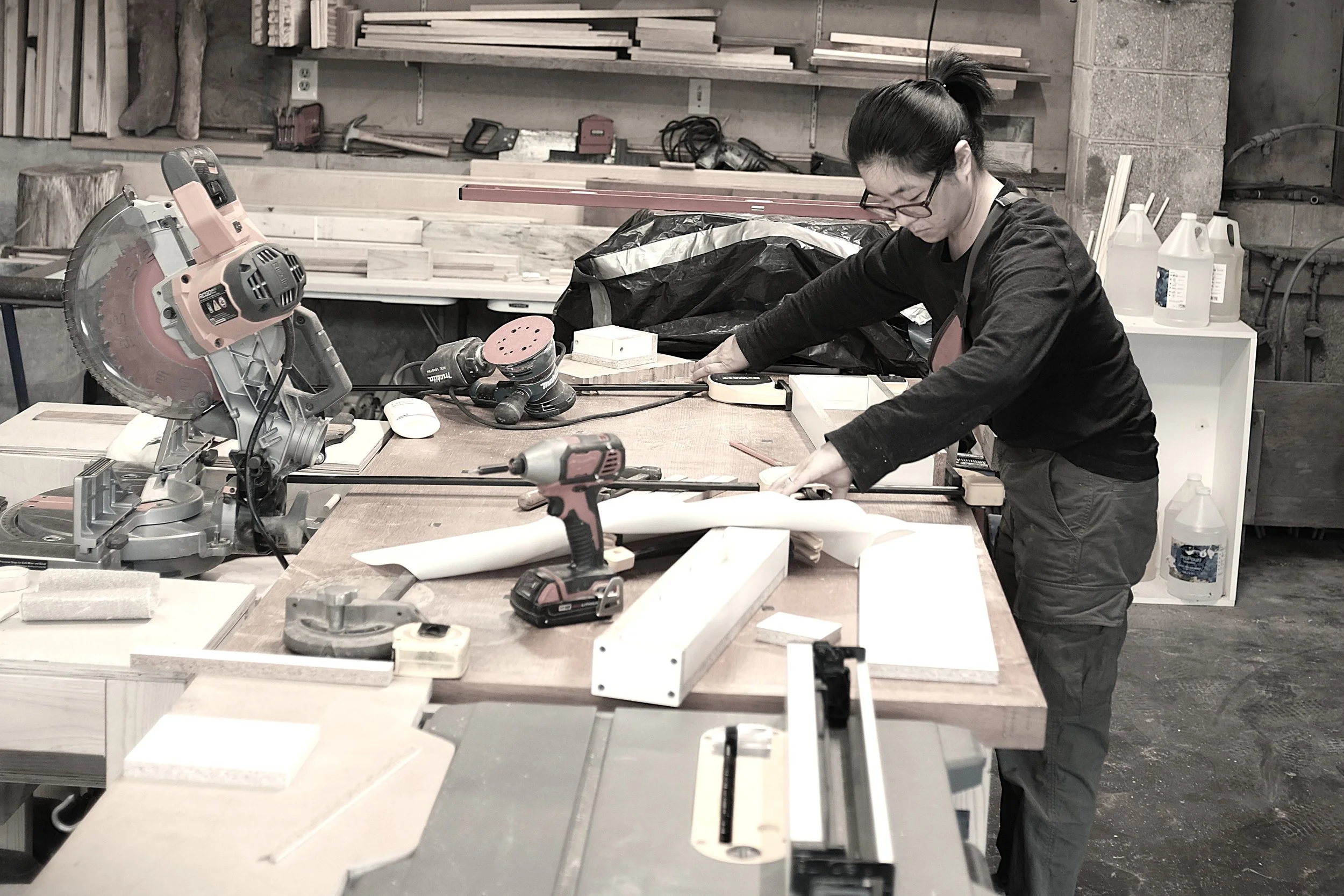
DeWalt 7485 Compact Table Saw
June 17, 2025 - May 19, 2026
You were pesky sometimes, but you got the job done and made it fun.
R.I.P.
Yesterday, we bid farewell to our much-loved table saw. After repackaging it for shipment to a service center somewhere in New York, a gaping hole was left in the workshop and in our hearts. Hand-trucking the box down the long hill from the barn to our front porch for UPS pick-up felt like a funeral procession. I’m not suggesting I shed an actual tear or that you, of all people, should care about my table saw and forthwith continue reading, but it was truly sad to me.
Less than a year old, it will always have a storied history in my lifetime of relationships with table saws. The first one I ever used was my grandfather’s, who built homes and churches with it. I never met him. He died of a heart attack in his sleep a year before I was born. My father, who helped him build those homes and churches as a boy and a teenager, inherited the saw and other tools that I now have and will keep because they’re beautiful, industrial, almost Art Deco-style relics. It wasn’t a true table saw in the modern sense. It was a table with a handheld circular saw attached underneath.
The next one I owned, I purchased in Alhambra or somewhere in LA from a commercial manufacturing company, well used in a professional setting, and equally well maintained. Those were pre-Web 2.0 days, so I must have found an ad in a newspaper. But it was legit. There are a few types of table saws. “Compact” table saws are smaller and usually require a stand or table, although I’ve seen them used on the ground at job sites. They’re portable, good for on-site work. “Jobsite” saws are similar but have an integrated mobile stand and often have slightly more power. “Contractor” saws strike a middle ground between the portability of smaller saws and the heft of “cabinet” saws; their integrated stands aren’t mobile (no wheels, and they’re heavy), and their motors are quite powerful. The one I bought when I was in my twenties was a cabinet table saw, a Delta monstrosity, the mother of all table saws at the time it was built, I imagine, and meant to stay put in a shop. I have no idea how, but I lugged it around the country as I moved from LA to Missouri and then to Santa Cruz, making my way through various graduate school programs.
In Santa Cruz, I brought it to a job site in Silicon Valley (still no idea how). The small construction company I was moonlighting for during my degree program was working on the cliffside mansion of Cisco Systems’ CEO. It was an exterior job, unusual for us, and I remember being upset that the Silicon Valley CEO-lady found a shady supplier for the illegal Amazon rainforest shingles and decking we were installing. One of the guys on the crew, a typical Santa Cruz pothead, managed to break the saw, which devastated me. But my boss, good guy that he was, gifted me a Makita jobsite table saw with a stand, including a built-in router table, to make up for my loss. I still have it, and I’ve had many good years with it. He also gave me an astonishing raise from $20 to $35 and hour (in the 1990s) just because he noticed that I was staying a few minutes late each day to make rounds around the house to clean up the debris a bit.
I considered quitting graduate school at that point and staying in carpentry instead, but what I couldn’t get past was something the master carpenter I was apprenticing with told me: “Most career carpenters I know are missing at least one finger.”
When Faith and I bought the new house and set up our workshop, we upgraded most of our power tools, including the Makita table saw my boss had given me. The DeWalt we purchased is pretty much the standard today for DIY and small workshops. They’re the high end of what you can get at a big box home store like Lowe’s or Home Depot. Everything we’ve done so far at Elm City Wares was facilitated by this little workhorse of a table saw.
But now it’s broken. It’s less than a year old and (not to be crass) can’t get it up anymore. The gear mechanism responsible for lifting and lowering the blade no longer works. Weirdly, it only works when the saw is on its side or upside down, which is obviously problematic. Per Reddit and YouTube, it’s a common problem for this particular saw, but there are no good explanations for why it happens and only extremely complicated and dubious demonstrations of how to fix it, so I called DeWalt. They provide a 90-day warranty, I was told. We’re way past that.
A quick side note: this is somewhat distressing to me. The DeWalt brand is centered on durability. It’s in all of their messaging and marketing, and I’ve found it to be true in the past. I have a DeWalt power drill that I purchased thirty years ago. It’s indestructible. But a 90-day warranty period almost suggests a lack of confidence in a table saw’s long-term durability.
They sent a shipping label. It’ll be picked up by UPS and sent to a Stanley Black & Decker service center in New York (Stanley and Black & Decker merged and now own DeWalt, which maybe explains the diminished durability of DeWalt these days - fodder for another post). They’ll diagnose the problem, repair or replace it, and ship it back, arriving God knows when. When we had to send a Bosch router out for repair, it took months. We survived (we have two of them). When it comes to a table saw, though, that’s not an okay situation for me. The weather is warm, and I have stuff to make. I need a table saw.
I briefly considered calling the old Santa Cruz Makita back into duty, but it’s not cut out for what we do now. The Makita is a true job-site saw, designed as a lightweight tool for quick cuts in soft construction-grade pine if you’re building a house or something. It would never be able to handle the hardwoods we work with to make fine furniture: cherry, walnut, maple, oak, etc.
So.
I’m sure it won’t be the last one I ever own, but I immediately called around and placed a deposit on a new saw, which we’re picking up tomorrow. When the DeWalt comes back in November or whenever the hell, I’ll thank it for its service, pay my respects, and post it for sale on Facebook Marketplace.
The new one, you might care to know, is more than twice the cost of the DeWalt, for one specific reason. It’s called SawStop, because within 5 milliseconds of the blade touching anything resembling flesh (or anything else that’s conductive), the blade stops and drops like it never existed. It just disappears. Check out that link. It’s like, I don’t, time travel or something. Semi-bad news for the short-term budget, but great news for our “fingies,” as Faith calls them (also “mushies” for mushrooms, “scrimpies” for shrimp, and a whole bunch of “-ies” in the extensive lexicon of vernacular Faithisms).
Cabinet-grade SawStop table saws are expensive, ranging from $3,000 to $4,000. The one we’re getting is their compact version, a little less than $1,000, but it still performs the blade vanishing act. Otherwise, it’s similar to the DeWalt, with the one non-finger-saving advantage of having a 10-inch blade instead of an 8 1/4-inch blade. A better saw overall. Or so I hope. And, it’s an insurance policy.
I live with tools. They allow me to express whatever creativity I can muster. But tools have lives, too. I’m hoping our rejuvenated DeWalt transforms someone else in Facebook Marketplace-land as it did for me. I also hope the new SawStop brings us many more years of ten-digit joy.
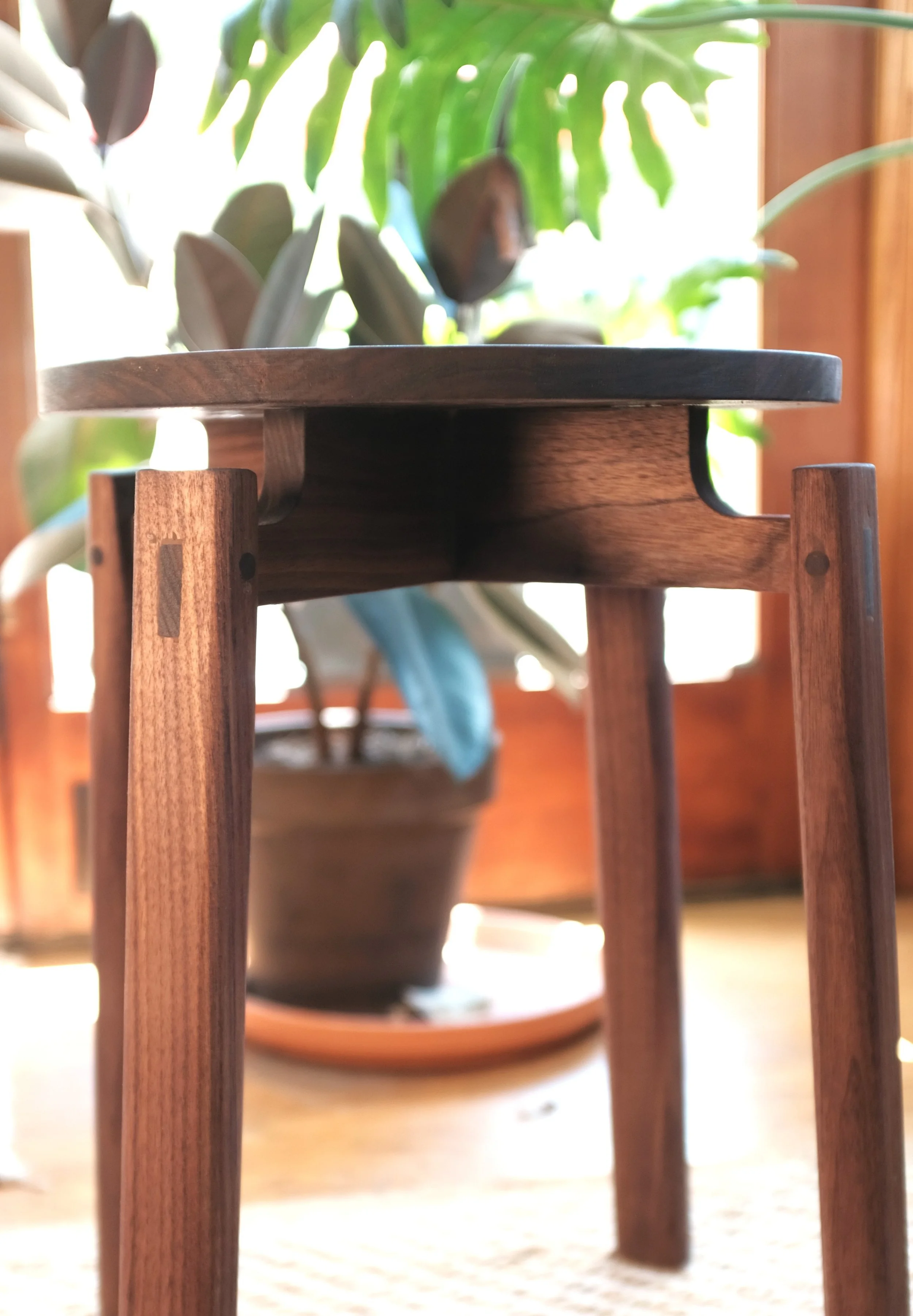
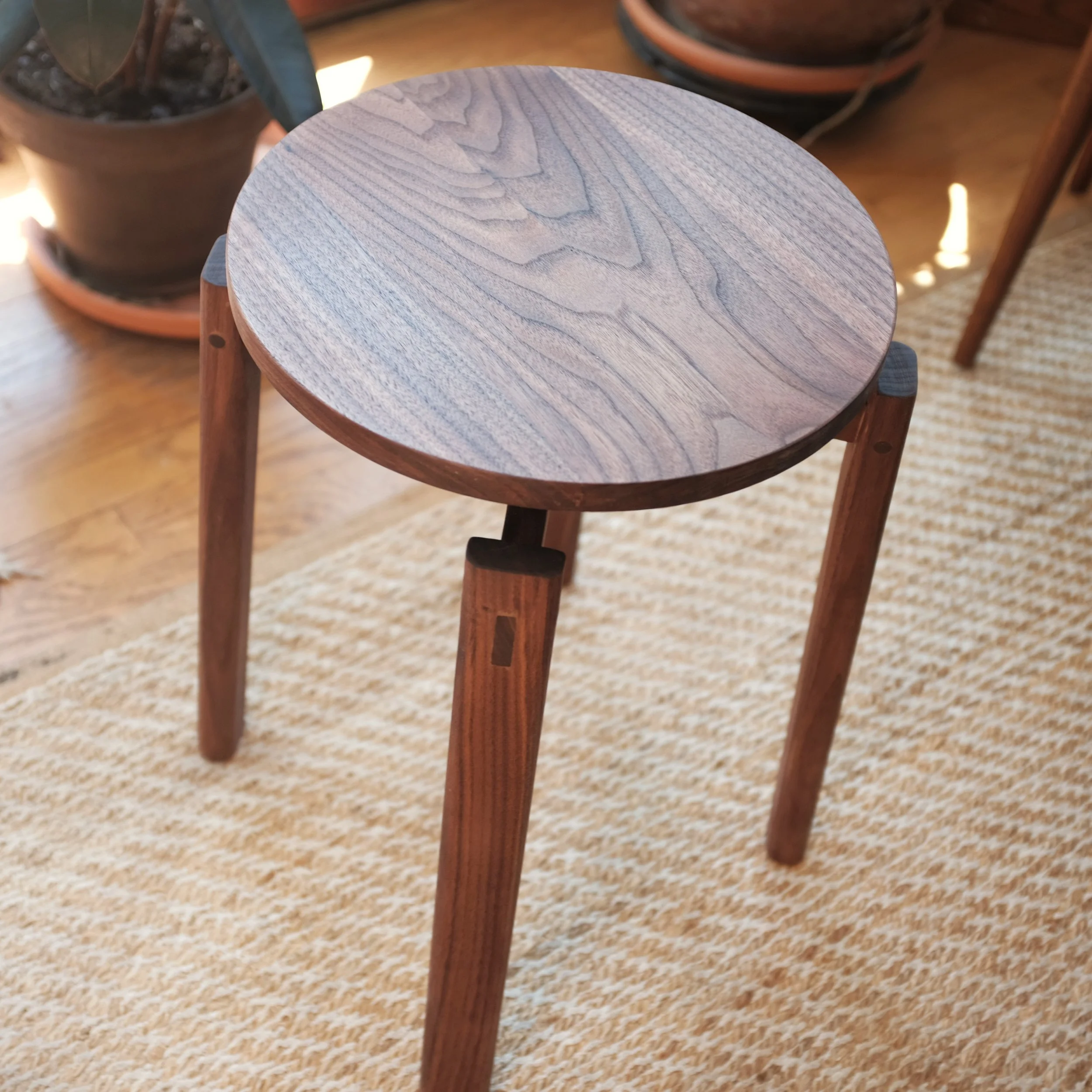
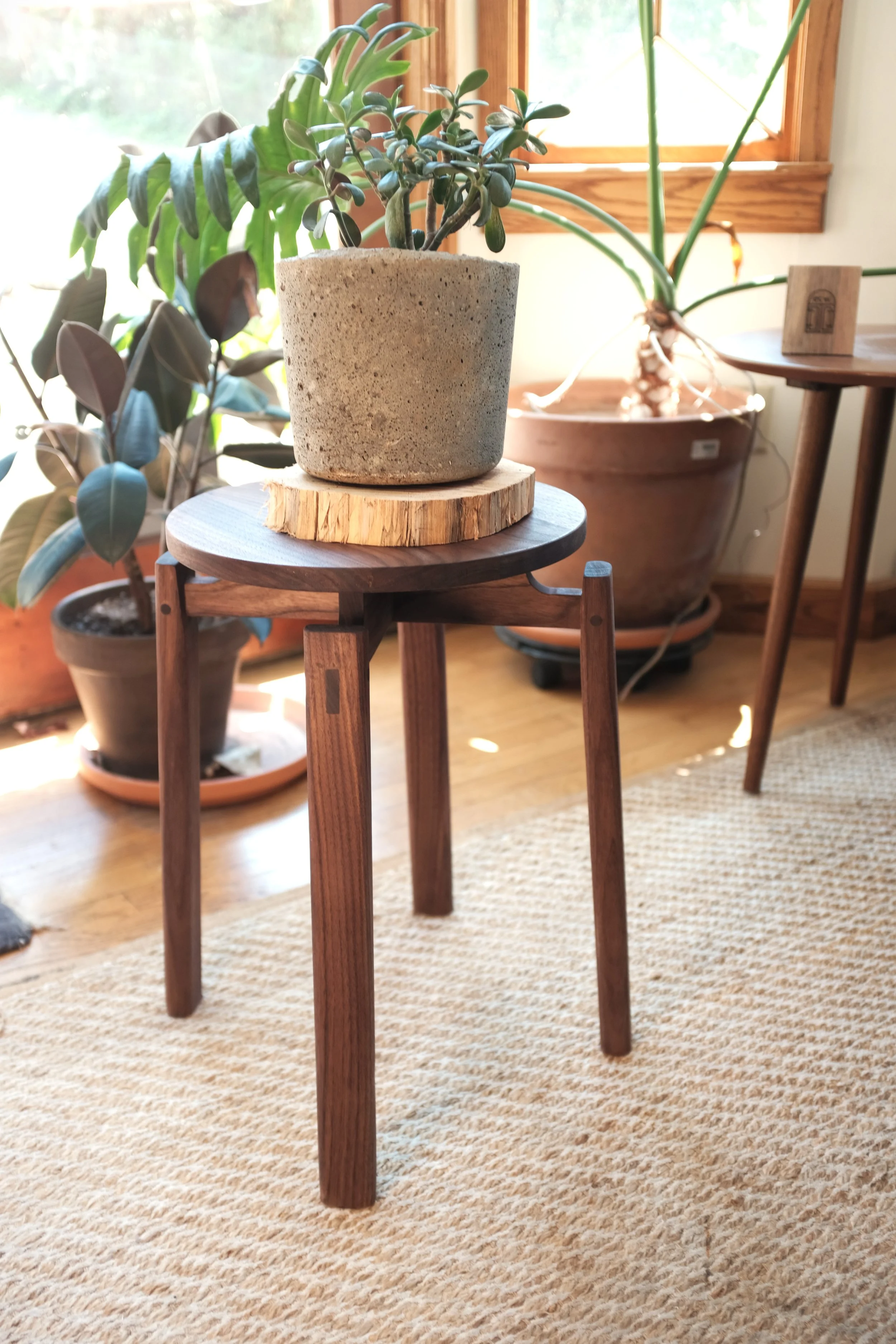
In memoriam, I leave you with these images of the last thing I made with the DeWalt 7485 Compact Table Saw: The Levitation Stool.